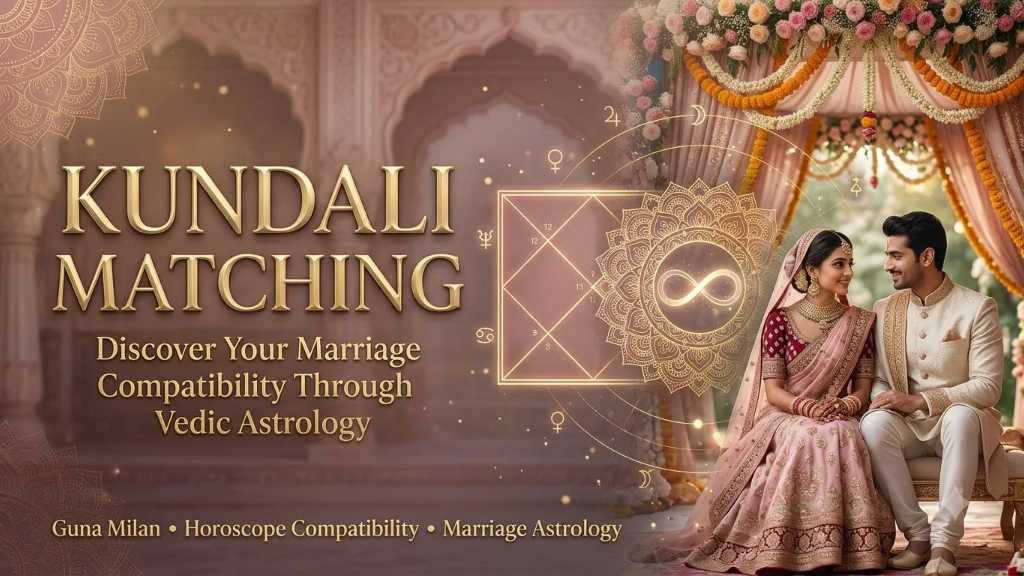
Marriage is an important step in life. Many couples want to know if their relationship will have a happy future. In Hindu astrology, kundali matching is a common way to check marriage compatibility. It checks two people’s birth charts to see if they are right for each other in marriage. Kundali matching helps families learn about different parts of a couple’s married life.. It looks at their nature, health, family life, emotional bond, and future together. Astrologers often use the Ashtakoota system to check compatibility.
But how does matching for marriage work? Which factors matter most? Here are eight key factors that can shape your marriage according to Vedic astrology.
Varna: Understanding Nature and Values
Varna is the first factor in traditional kundali matching. It looks at the nature and values of both partners. It carries one point in the Ashtakoota system.
This factor is linked to the way two people think and behave. It may offer a traditional view of their basic nature and values.
Kundli Milan
Ashtakoot Guna Milan: 36-point Vedic marriage compatibility from the Moon’s nakshatra.
Groom (Boy)
Bride (Girl)
| Koota | Groom | Bride | Score |
|---|
Interpretation: 33–36 excellent, 25–32 good, 18–24 acceptable, below 18 not recommended. This tool covers Ashtakoot only. Manglik dosha, dasha and a full chart review by a qualified astrologer are not included, and it is for guidance, not a substitute for one.
Vashya: Attraction and Mutual Understanding
Vashya is the second factor in marriage kundali matching. It looks at attraction and the influence partners may have on each other.
This factor carries two points. Astrologers use it to study how well two people may understand and support each other. A good bond helps couples stay close and care for each other.
Tara: Health and Good Fortune
Tara Koota is the third factor in marriage matching horoscope analysis. It compares the birth stars, also known as Nakshatras, of both partners.
It carries three points in the traditional system. Astrologers study this factor to understand health, well-being, and good fortune. It is one part of the overall compatibility check.
Yoni: Physical and Emotional Compatibility
Yoni Koota is the fourth factor in kundali matching. It focuses on physical attraction and personal compatibility between two people.
It carries four points. Astrologers compare the birth stars of both partners to study their natural behaviour and relationship comfort. This factor is traditionally linked to closeness and married life.
Graha Maitri: Friendship and Mental Connection
Graha Maitri is the fifth factor in marriage matching kundali. It checks the friendship between the ruling planets of both partners’ Moon signs.
It carries five points. This factor looks at mental understanding, shared views, and emotional support. A good connection may help couples handle daily challenges together.
Gana: Behaviour and Personality
Gana Koota is the sixth step in checking two people’s birth charts for marriage.It studies the nature and behaviour of both partners through their birth stars.
The three Ganas are Deva, Manushya, and Rakshasa. Each represents a different nature in traditional astrology. This factor carries six points.
Astrologers use it to study personality differences and how partners may adjust to each other.
Bhakoot: Family Life and Relationship Harmony
Bhakoot is the seventh step in checking two birth charts before marriage. It compares the Moon signs of both partners.
It carries seven points in the Ashtakoota system. Astrologers study this factor to understand family life, emotional bonds, and relationship harmony.
Some Moon sign combinations are linked to Bhakoot Dosha. An astrologer may check the full birth charts before giving advice.
Nadi: Health and Family Compatibility
Nadi is the eighth and last step in traditional kundali matching.. It carries the highest value of eight points.
There are three types of Nadi: Adi, Madhya, and Antya. Astrologers compare the Nadi of both partners to check traditional health and family compatibility.
If both partners have the same Nadi, it is called Nadi Dosha in traditional astrology.. However, the complete birth charts should also be checked before reaching a conclusion.
How Many Points Are Needed for Marriage Matching Kundali?
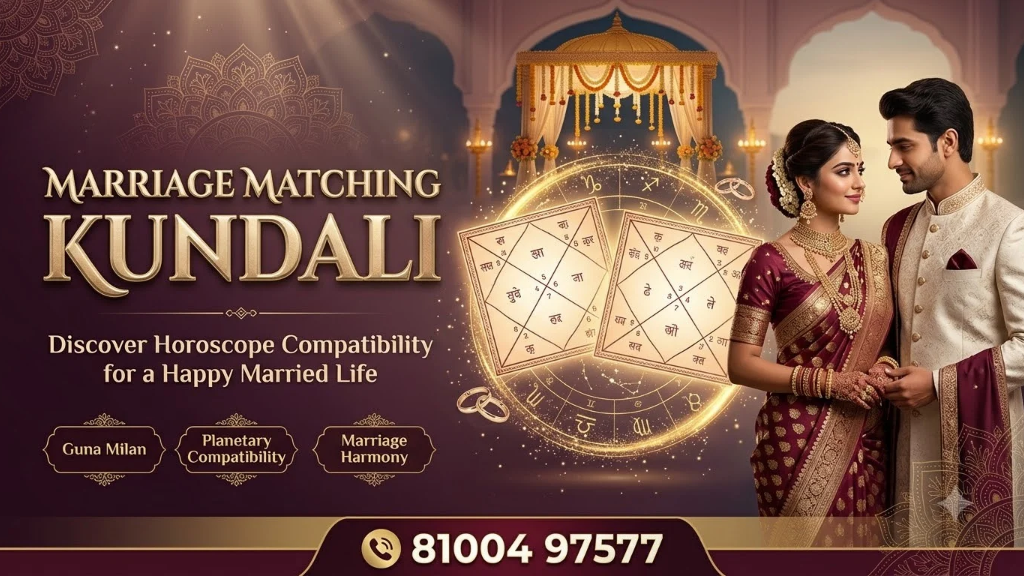
The Ashtakoota system has 36 points. Astrologers review the scores to see how suitable two people may be for married life.
| Matching Points | Traditional Meaning |
| Below 18 | Low compatibility |
| 18–24 | Average compatibility |
| 25–32 | Good compatibility |
| 33–36 | High compatibility |
In traditional kundali matching, a score of 18 or above is seen as a good match.. However, a high score does not promise a happy marriage. A low score does not mean a marriage must fail.
Is Kundali Matching Enough to Predict Married Life?
No, kundali matching is only one part of marriage planning. A complete horoscope analysis may include the seventh house, Venus, Jupiter, Mars, and the Navamsa chart.
Astrologers may also check Manglik Dosha, planetary positions, and current planetary periods. These factors offer a wider view of traditional marriage astrology.
Couples should also focus on trust, respect, honest talks, and shared goals. These things play an important role in building a healthy relationship.
Final Thoughts
Marriage matching kundali is an old Vedic astrology practice that checks eight key areas of compatibility. Each part has its own role in the Ashtakoota system..
Understanding these factors can help couples learn more about their horoscope compatibility. Still, marriage decisions should consider personal choice, mutual respect, and real-life understanding.
Astrology offers traditional guidance, not a guaranteed prediction of married life.
Astro Priyanka Chakraborty wrote this article for Siddhi Tantro Astrology.
