
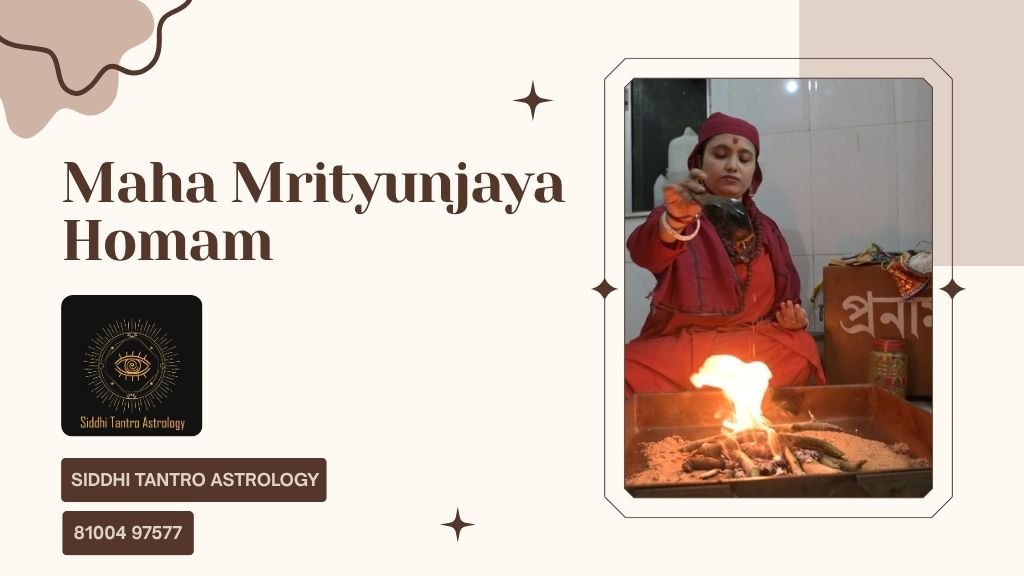
Death makes everyone a little uneasy. Even the calmest person you know has a quiet worry about health, ageing, or the people they love. That worry is exactly what the Mrityunjaya Homam was built to answer.
This fire ritual is one of the oldest and most trusted practices in Hindu worship. Families call on it during illness, before surgery, on birthdays, and during periods when life just feels fragile. And now, more people are asking a very practical question: do you really need a temple and a team of pandits, or can you light this fire in your own living room?
Short answer: yes, you can perform Mrityunjaya Homam at home. But there’s a right way to do it, and a few things worth knowing before you strike that first match. Let’s get into it.
What Is Mrityunjaya Homam?
Mrityunjaya Homam is a Vedic fire ritual dedicated to Lord Shiva in his form as Mrityunjaya, the “conqueror of death.” At the centre of the ritual sits the Maha Mrityunjaya Mantra, a verse pandits and devotees have chanted for thousands of years.
The mantra goes:
Om Tryambakam Yajamahe Sugandhim Pushtivardhanam Urvarukamiva Bandhanan Mrityor Mukshiya Maamritat
In plain words: we bow to the three-eyed Lord Shiva, the fragrant one who nourishes all beings. May he free us from the grip of death, the way a ripe cucumber falls easily from its vine, and connect us to the truth that our soul never really dies.
That’s the whole idea in one sentence. The mantra doesn’t promise to cancel death. It asks for freedom from the fear of it, and for strength while you’re still here.
The Story Behind the Mantra
Every good ritual has a story, and this one is a strong one.
A sage named Mrikandu and his wife Marudmati wanted a child for years. They did penance to Lord Shiva, who eventually granted their wish, with a catch. Their son would be brilliant and kind, but he would only live to sixteen.
They named the boy Markandeya. He grew up devoted to Shiva, and as his sixteenth year approached, he doubled down on his worship instead of running from it. When Yama, the god of death, came to collect him, Markandeya was hugging a Shiva lingam in prayer. Yama threw his noose anyway. Shiva stepped out of the lingam, stopped Yama in his tracks, and granted the boy eternal life.
That’s the mantra Markandeya is said to have received in that moment. People have leaned on it ever since, whenever death feels a little too close for comfort.
Why Is Mrityunjaya Homam Done?
People don’t perform this homam for one single reason. It shows up at different points in life, for different needs. Some of the most common reasons include:
- During serious illness — chronic conditions, sudden health scares, or before a major surgery
- Birthdays — as a way to ask for a healthy year ahead
- Mrityu dosha or Maraka dosha — when an astrologer spots a difficult planetary period in someone’s chart
- After an accident or a close call — to mark relief and ask for continued protection
- For elderly parents or newborns — two life stages where families feel especially protective
- General anxiety about death or health — sometimes the reason is simply peace of mind
The idea running through all of it is the same. You’re asking for strength, protection, and a mind that isn’t gripped by fear.
Mrityunjaya Homam Benefits
People who perform this homam, or have it performed on their behalf, report a mix of physical, mental, and spiritual benefits. None of these are medical claims — think of them as the traditional, faith-based purpose of the ritual.
| Type of Benefit | What It’s Believed to Offer |
|---|---|
| Physical | Support during illness, relief from chronic health trouble, protection from accidents |
| Mental | Less fear around death and disease, calmer mind, relief from stress |
| Spiritual | Closeness to Lord Shiva, progress on one’s spiritual path, movement toward moksha |
| Family | Protection for the household, blessings for elders and children |
| Emotional | A sense of control during uncertain times, comfort during grief or worry |
If there’s one word that sums up why families keep coming back to this ritual, it’s reassurance. You’re not solving a problem with a spreadsheet. You’re sitting with it, in front of a fire, with intention.
When to Perform Mrityunjaya Homam
Timing matters in Vedic ritual, though it’s less rigid than people assume. Here’s what tradition recommends.
| Occasion | Why It’s Chosen |
|---|---|
| Mondays | Sacred to Lord Shiva |
| Sundays | Ruled by the Sun, linked to health and vitality |
| Pradosham | A twilight period considered auspicious for Shiva worship |
| Masa Shivaratri / Maha Shivaratri | Monthly and annual festivals dedicated to Shiva |
| Shravana month | Considered one of the holiest months for Shiva devotees |
| Your birth star (Janma Nakshatram) | Personal significance tied to your own chart |
| During Mrityu dosha or Maraka dosha | Recommended by an astrologer after checking your horoscope |
If you’re doing this because of a specific worry, like a health diagnosis, you don’t need to wait for the “perfect” day. A Monday or a Pradosham within the week is a good, practical choice.
Can Mrityunjaya Homam Be Performed at Home?
Here’s the part you actually came for.
Yes. Mrityunjaya Homam can absolutely be done at home. It doesn’t require a temple, and it doesn’t require a huge team of priests. Families across India have been lighting this homam in their courtyards, terraces, and puja rooms for generations.
That said, there are a few honest caveats worth knowing before you start.
What You Need for a Home Setup
- Open or ventilated space — a terrace, courtyard, balcony, or a well-ventilated room. A homam involves real fire and smoke, so a sealed apartment room isn’t ideal.
- A havan kund — a small copper or brick fire pit, sized for home use. These are easy to find online or at a pooja store.
- A pandit, or a clear guide — the mantra and the sequence of offerings matter. Many families invite a pandit to their home for this exact reason, while others follow a well-structured guide if they’re confident in Sanskrit pronunciation.
- All the ritual items in advance — running out of an item halfway through breaks the flow of the ritual.
Home Homam vs. Temple Homam
| Factor | At Home | At a Temple |
|---|---|---|
| Setting | Familiar, private, personal | Traditional, communal energy |
| Cost | Generally lower | Can be higher, especially for elaborate versions |
| Convenience | High — no travel, your own schedule | Requires travel and booking around temple timings |
| Scale | Usually smaller, 108 chants | Can scale up to 1,008 or even 11,000 chants |
| Guidance | Depends on whether a pandit is invited | Pandits and infrastructure already in place |
| Family involvement | Everyone can sit close and participate | Space may be shared with other devotees |
Neither version is “better” in a spiritual sense. A home homam done with sincerity carries just as much weight as one performed anywhere else. What actually matters is the mantra, the intention, and the correct offerings.
How to Perform Maha Mrityunjaya Homam at Home
If you’re planning to do this yourself, here’s the general sequence most pandits follow. This isn’t a substitute for a trained priest, but it gives you a clear picture of what the ritual actually involves.
- Clean the space. Sweep and wash the area where you’ll set up the havan kund. Draw a simple rangoli if you like.
- Ganapathi Puja. Every Vedic ritual opens with a short prayer to Lord Ganesha, to clear obstacles.
- Kalasha Sthapana. A pot filled with water, mango leaves, and a coconut is set up to represent divine presence.
- Sankalpa. This is where you state your intention out loud, in your own words or through the pandit. Name the reason you’re performing the homam.
- Invocation of Lord Shiva. The pandit or the person leading the ritual invites Shiva’s presence into the fire.
- Japa — chanting the mantra. The Maha Mrityunjaya Mantra is chanted 108 times at a minimum. Some households go further, to 1,008 times, though that takes considerably longer.
- Homam — the fire offerings. Ghee, sesame seeds, herbs, and other samagri are offered into the fire with each chant.
- Purnahuti. A final, larger offering marks the close of the main ritual.
- Aarti and blessings. The fire is honoured with a lamp, and everyone present receives vibhuti (sacred ash) as a blessing.
The whole process usually takes between one and three hours at home, depending on how many rounds of chanting you include.
Items You’ll Need
| Item | Item |
|---|---|
| Havan kund | Turmeric and kumkum |
| Ghee | Camphor and cotton wicks |
| Black sesame seeds | Betel leaves and nuts |
| Dry herbs (samagri mix) | Coconuts |
| Darbha grass | Fresh flowers and garlands |
| Rudraksha japa mala | Fruits, five varieties |
| Milk for abhishekam | Rice, roughly 2 to 5 kg |
| Sandalwood powder | Mango leaves for toran |
Most pooja stores sell ready-made Mrityunjaya Homam kits that bundle nearly all of this together, which saves a lot of running around.
Can You Chant the Mrityunjaya Mantra Yourself?
Yes, and this is worth doing even outside of a formal homam.
You don’t need to be a priest to chant the Maha Mrityunjaya Mantra. Many people repeat it quietly during meditation, before sleep, or while facing a hard diagnosis. Chanting on your own, without the fire ritual around it, is still considered meaningful. It’s simply a smaller, personal version of the same practice.
A few practical tips if you’re chanting it yourself:
- Learn the pronunciation properly first. Sanskrit has sounds that don’t map neatly onto English, and getting it close matters more than getting it perfect.
- A rudraksha mala helps you keep count without breaking focus.
- 108 repetitions is the traditional number, matching the beads on a standard mala.
- Early morning, ideally before sunrise, is considered the best time, though evenings work too if mornings aren’t realistic for you.
Can You Play the Maha Mrityunjaya Mantra at Home?
If chanting yourself feels like a big ask, playing a recording is a genuinely good alternative. Many families keep the Maha Mrityunjaya Mantra playing softly in the background during a health crisis, or simply as part of their daily routine.
Playing the mantra doesn’t carry quite the same weight as an active homam with fire offerings, but it still fills a space with sound that many people find calming and protective. Some households play it near someone who is unwell, or during the hour before sunrise, as a quiet form of daily practice.
Things to Keep in Mind Before You Start
A home homam works well when you plan for a few practical realities.
- Ventilation matters more than people expect. Even a small fire produces real smoke. Choose an open terrace or courtyard over a closed room.
- Fire safety comes first. Keep water nearby, don’t let children sit too close to the kund, and never leave the fire unattended.
- Get the pronunciation right, or invite someone who already has it right. Mispronounced Sanskrit doesn’t ruin your intention, but it does take away from the ritual’s structure.
- Buy your samagri a day or two early. Last-minute pooja store runs on the morning of the homam add stress you don’t need.
- Don’t rush the sankalpa. Taking thirty seconds to clearly state why you’re doing this ritual sets the tone for everything that follows.
When to Bring in an Expert
Home rituals work beautifully for routine occasions, like a birthday blessing or a general prayer for family health. But for anything tied to a specific astrological concern, a Mrityu dosha reading, or a Maraka dosha in someone’s chart, it helps to get proper guidance first.
This is where consulting a trained astrologer earns its place. Services like Siddhi Tantro Astrology work with clients to check whether a homam is genuinely called for, and what scale it should be performed at. Astrologers such as Astro Priyanka Chakraborty are known for reading a horoscope in detail before recommending a ritual, rather than suggesting one as a default fix for every worry. A proper reading tells you whether 108 chants will do, or whether your situation calls for a longer, more structured homam with a pandit present.
Think of it the way you’d think of a doctor’s second opinion. You can treat a mild headache at home. For anything more serious, a proper diagnosis first saves you a lot of guesswork later.
Can We Play Maha Mrityunjaya Mantra at Home? A Complete Guide for Indian Households
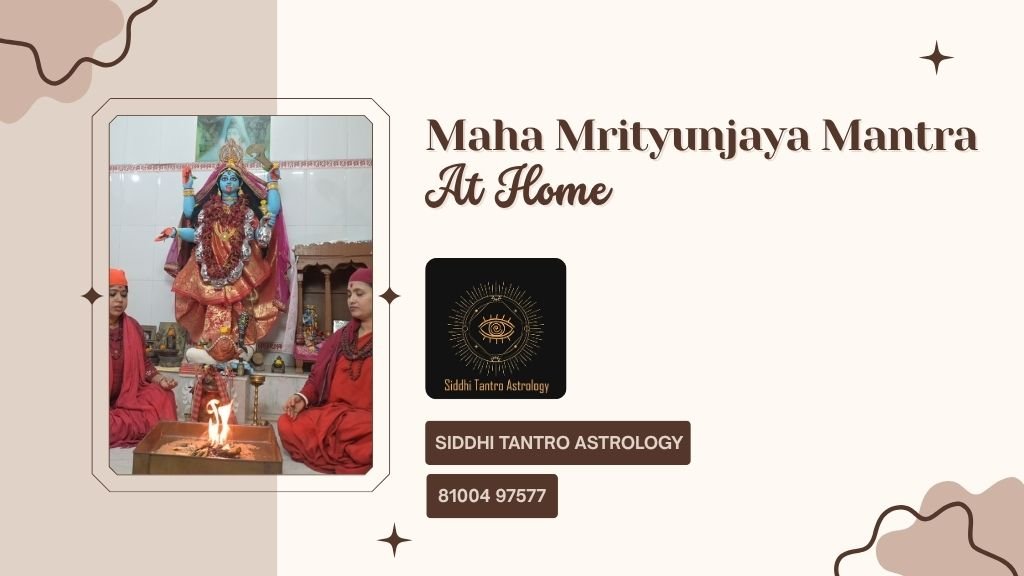
Picture this. It’s 6 a.m. Your tea is brewing. Somewhere in the house, a low, steady chant fills the air — Om Tryambakam Yajamahe… You didn’t light a diya. You didn’t sit down with a mala. You just pressed play on your phone. Does it count?
That question sits at the back of a lot of Indian minds. We grew up watching grandparents chant with closed eyes and a rudraksha mala moving bead by bead. Now we live in a world of YouTube playlists and Alexa speakers. So can you really play the Maha Mrityunjaya Mantra at home — as audio, as a background chant, as a daily ritual squeezed between meetings and school runs?
Short answer: yes. Long answer: it depends on what you’re hoping to get from it. Let’s get into it properly.
What Exactly Is the Maha Mrityunjaya Mantra?
Before we talk about playing it or chanting it, let’s get the basics straight. The Maha Mrityunjaya Mantra is one of the oldest and most respected verses dedicated to Lord Shiva. It comes from the Rig Veda, tucked into the seventh mandala. That makes it thousands of years old, older than most things you’ll encounter in daily life.
The mantra itself:
Om Tryambakam Yajamahe Sugandhim Pushtivardhanam Urvarukamiva Bandhanan Mrityor Mukshiya Maamritat
In plain English: we worship the three-eyed Lord Shiva, whose fragrance nourishes all beings. Just as a ripe cucumber falls easily from its vine, may He free us from the grip of death and lead us toward immortality.
That’s the poetry of it. The practical meaning is simpler. People chant this mantra when they want protection, healing, courage, or peace of mind during hard times — illness, fear, grief, or just the ordinary anxiety of modern life.
You’ll also hear it called by other names. Some call it the Tryambakam Mantra, after Shiva’s three eyes. Others call it the Rudra Mantra, pointing to Shiva’s fierce, protective side. And some know it as the Mrita-Sanjivini Mantra — the “life-restoring” chant, thanks to the legend behind it.
The Legend Behind the Mantra
Every powerful mantra has a story, and this one has a good one. Sage Markandeya was destined to die young — some versions say at age 12, others say 16. His parents, devout followers of Shiva, kept the truth from him for as long as they could.
When the boy learned his fate, he didn’t panic. He sat before a Shiva lingam and began his own quiet devotion. When Yama, the god of death, arrived to take him, Markandeya wrapped his arms around the lingam and refused to let go. Shiva appeared, stopped Yama in his tracks, and granted the boy immortality. This mantra was Shiva’s gift to Markandeya — proof that sincere devotion can outlast fear itself.
It’s a good story to remember the next time you’re chanting at 6 a.m. and your mind wanders to your inbox. Focus is the whole point.
So, Can We Play Maha Mrityunjaya Mantra at Home?
Yes. Fully, unambiguously, yes.
There’s no scripture, no temple rule, and no priest anywhere who will tell you this mantra is off-limits at home. Unlike some rituals that need a fire pit, a qualified priest, or specific astrological timing, this mantra travels well. It works in a one-room flat in Kolkata just as it works in a Trimbakeshwar temple courtyard.
But here’s where it gets interesting. “Playing” the mantra and “chanting” the mantra are two different experiences, and they give you different things.
Playing vs. Chanting: What’s the Real Difference?
| Aspect | Playing the Mantra (Audio) | Chanting the Mantra (Active) |
|---|---|---|
| Effort required | Low — press play | Moderate to high — sustained focus |
| Best for | Background ambience, calming the home, children, elderly, busy schedules | Personal spiritual practice, healing intentions, meditation |
| Spiritual depth | Gentle, ambient benefit | Deeper, more direct engagement |
| Time needed | Any duration | Usually 108 repetitions (roughly 20-40 minutes) |
| Pronunciation | Always correct, since it’s recorded | You need to learn it properly first |
| Ideal use case | Playing during puja, before sleep, during stressful weeks, in the background while cooking or working | Dedicated morning or evening sadhana |
Both have value. Playing the mantra fills your home with a steady, calming vibration. Many families keep it running softly during Shivratri, during an illness in the house, or simply as background sound while getting ready in the morning. It sets a tone. It’s not lazy — it’s just a different kind of devotion, one that works with a busy Indian household’s real schedule.
Chanting it yourself, on the other hand, asks more of you. You show up, you focus, you repeat the words with intention. That active participation is what most traditional texts point to when they talk about the mantra’s full benefits. As the guide on chanting Maha Mrityunjaya from Shvasa explains, the practice works best when you stay attentive to each word and where you feel its vibration in your body.
Our advice? Don’t pick one over the other. Play it in the background for atmosphere. Chant it yourself when you want the deeper work. Many households do both, and there’s nothing wrong with that.
Maha Mrityunjay Homam is one of the most valued Vedic fire rituals for Lord Shiva. The Maha Mrityunjay Mantra has 32 syllables and is traditionally chanted 108, 1,008, or 125,000 times during the ritual. The number 108 holds deep spiritual value in Hindu practice. Many priests use 11, 21, or 51 sacred offerings during the homam. A complete Maha Mrityunjay Homam usually lasts 2 to 5 hours, based on the ritual process. Millions of devotees perform this homam every year for good health, long life, peace, and strength. The ritual is most popular during Maha Shivaratri, Shravan, and other holy days. Families often perform Maha Mrityunjay Homam before major life events or during health concerns to seek Lord Shiva’s divine blessings.
Can I Chant Mrityunjaya Mantra Myself, Even Without Training?
This is the question people quietly worry about. Do you need to be a priest? Do you need years of Sanskrit training? Do you need permission from someone?
No, no, and no.
Anyone can chant this mantra — any age, any background, any level of experience. The mantra doesn’t discriminate. What matters more than perfect pronunciation is sincerity. That said, correct pronunciation does matter for the sound and rhythm to work as intended, so it helps to listen to a few recordings first and follow along until the words feel natural in your mouth.
Here’s a simple starting plan if you’re new to this:
- Listen first. Play a well-recorded version a few times just to absorb the rhythm.
- Read along. Keep the Sanskrit text (and a transliteration) in front of you for the first week or two.
- Start small. Eleven or twenty-one repetitions is a completely respectable start. You don’t need to jump to 108 on day one.
- Build up gradually. Once the words feel familiar, work your way toward the traditional 108 count using a mala.
- Stay consistent. A short daily practice beats an occasional marathon session.
There’s no test to pass here. This is a practice you grow into.
Best Time to Chant Maha Mrityunjaya Mantra at Home
Timing matters in Indian spiritual practice, and this mantra is no exception. While you technically can chant it any time of day, certain windows are considered far more powerful.
- Brahma Muhurat — roughly between 4 a.m. and 6 a.m. This is widely regarded as the best window. The house is quiet, your mind is fresh, and the day hasn’t started pulling you in ten directions yet.
- Early morning, before noon — if Brahma Muhurat feels impossible with your schedule, any time before noon works well.
- Sandhya time in the evening — around sunset, as day turns to night.
- Mondays — traditionally considered auspicious for Lord Shiva.
- Maha Shivratri, Pradosh Vrat, or Amavasya — these dates carry extra spiritual weight for Shiva worship specifically.
Some traditional sources suggest avoiding the mantra after 12 noon altogether. You don’t need to treat this as an unbreakable rule, but if you can build a routine around early mornings, you’ll likely notice the practice sticks better. Mornings are quieter. Fewer distractions. Fewer excuses.
Setting Up Your Space: What You Actually Need
You don’t need a marble temple room to do this properly. A clean corner, a bit of intention, and a few basic items go a long way.
Essential Items (Samagri)
| Item | Purpose |
|---|---|
| Clean, quiet corner | Your dedicated puja space |
| Image or idol of Lord Shiva, or a Shiva lingam | Focal point for worship |
| Rudraksha mala (108 beads) | Counting your chants without breaking focus |
| Copper or brass water vessel | For offerings and abhishekam |
| Diya (lamp) and incense sticks | Purifying the atmosphere |
| Flowers and bilva (bel) leaves | Traditional offerings dear to Shiva |
| Sandalwood paste | Used for tilak and offerings |
| Panchamrit (milk, honey, curd, ghee, sugar) | Optional but traditional offering mix |
None of this needs to be expensive. A small brass diya, a few bel leaves from a neighbourhood tree, and a simple mala are enough to get started. The spiritual weight comes from your attention, not your shopping list.
Preparing Yourself
- Bathe and wear clean clothes before you begin.
- Sit facing east or north — this is the traditional direction for Shiva worship.
- Keep your phone away, or at least on silent, unless you’re using it to play the mantra.
- Sit with your spine straight, whether on the floor or a cushion.
- Take a few slow breaths before you start chanting, to settle your mind.
Step-by-Step: How to Do Maha Mrityunjaya Jaap at Home
Here’s a straightforward method you can follow, drawn from traditional practice and adapted for a modern home:
Step 1: Sankalp (Set Your Intention) Before you begin, silently or aloud, state your purpose. Are you chanting for health, for a family member’s recovery, for peace of mind? Setting this intention focuses the entire practice.
Step 2: Invoke Ganesha Many traditions begin any significant ritual by remembering Lord Ganesha first, to clear obstacles from the path ahead.
Step 3: Offer to Shiva Offer water, flowers, and bel leaves to your Shiva image or lingam. If you’re doing abhishekam, pour water or milk gently over the lingam while staying focused on the mantra’s meaning.
Step 4: Chant the Mantra Using your mala, chant the Maha Mrityunjaya Mantra. Move one bead per full repetition. Aim for steady, clear pronunciation — not rushed, not overly slow. Traditional guidance says the lips should move but the sound should stay soft, almost inward.
Step 5: Aarti and Prayer Once you finish your count, offer a short aarti with the diya, and sit for a moment in silence. Let the practice settle rather than jumping straight back into your day.
Step 6: Share Prasad If you’ve prepared Panchamrit or any offering, share it with family members. This turns a solitary practice into something the whole household benefits from.
How Many Times Should You Chant?
The number matters, and different counts serve different goals.
| Count | Purpose | Approx. Time |
|---|---|---|
| 11 or 21 | Good starting point for beginners | 5–10 minutes |
| 108 | Standard daily practice for health and peace | 20–40 minutes |
| 1,008 | Special intentions, significant life events | 3–5 hours (often across a day) |
| 1.25 lakh (125,000) | Full Anushthan, usually done over 100+ days or in groups | Weeks to months |
If you’re chanting on your own at home, 108 is the number most people work toward. It’s manageable, it’s traditional, and a mala makes it easy to track without losing count mid-chant.
The 1.25 lakh count is a serious undertaking, usually reserved for a specific remedy or a significant life goal, and it’s often done with guidance from an experienced priest or astrologer, sometimes in a group setting to complete it faster.
Mahamrityunjaya Homam: Can It Be Done at Home?
This is where things get a little more nuanced, and it’s one of the most searched questions on this topic — can Mrityunjaya Homam be performed at home?
A homam (or havan) is a fire ritual. It involves a sacred fire, specific offerings poured into that fire while chanting, and — traditionally — a set method that a trained priest follows. This is a step up from simple chanting.
Here’s the honest picture:
Yes, a basic Mahamrityunjaya Homam can be conducted at home, but it works best with proper guidance. Unlike quiet personal chanting, a homam involves fire safety, correct proportions of ghee and samagri, and a fairly specific sequence of mantras and offerings. Getting the fire ritual technically right matters more here than it does with pure chanting, since you’re working with an open flame and specific offerings meant to be poured at precise points.
In traditional practice, the full purashcharan method around this mantra actually has five parts: chanting (jaap), fire offering (havan), water offering (tarpan), sprinkling (marjan), and feeding Brahmins. The homam is usually done as one-tenth of your total chant count — so if you’ve completed 12,500 chants, you’d traditionally follow with a homam of a proportional scale.
If you want to attempt a simple version at home:
- Use a small, safe homam kund or a metal container designed for fire rituals.
- Keep it in a well-ventilated space, away from curtains, paper, or anything flammable.
- Use basic hawan samagri, ghee, and dried bel leaves as offerings.
- Chant the mantra while offering small spoonfuls into the fire, saying “Swaha” with each offering.
- Keep water nearby for safety, always.
For anything beyond a simple, small-scale homam, it’s genuinely worth consulting a priest or an experienced astrologer first. Fire rituals carry real physical risk if done carelessly, and the spiritual effectiveness is considered stronger when the sequence is followed correctly. This is exactly the kind of situation where guidance from someone like Astro Priyanka Chakraborty at Siddhi Tantro Astrology can help — getting the right samagri list, the correct timing based on your personal chart, and a proper sequence to follow, so the ritual carries its full intended weight rather than becoming guesswork.
| Do | Don’t |
|---|---|
| Chant with a calm, clear mind | Rush through the words to finish faster |
| Keep your space clean before starting | Chant right after eating a heavy meal |
| Maintain consistency, even if it’s just 11 chants a day | Skip weeks and expect the same results |
| Use a rudraksha mala to count | Touch the mala with your index finger while counting |
| Stay away from non-vegetarian food and alcohol during a dedicated practice period | Treat the mantra as a quick fix for one bad day |
| Face east or north while chanting | Chant while distracted by your phone or TV |
None of this is about punishment or strict rules for their own sake. It’s about creating conditions where your mind can actually settle into the practice instead of fighting against noise and distraction.
What Are the Real Benefits of This Practice?
People turn to this mantra for a wide range of reasons, and the benefits people report fall into a few clear buckets.
Physical and health-related Many practitioners chant this mantra during illness, recovery, or when someone in the family is going through a health scare. It’s often described as offering strength and resilience during difficult medical periods, alongside — never instead of — proper medical care.
Emotional and mental Regular chanting is widely reported to reduce stress and anxiety, sharpen focus, and bring a steadier, calmer state of mind. The rhythmic, repetitive nature of any mantra practice has a meditative quality, and many people describe it as genuinely grounding during chaotic weeks.
Spiritual For those on a devotional path, this mantra deepens connection with Shiva, supports meditation practice, and is considered one of the more protective, shielding chants in Hindu tradition.
Family and household When played or chanted as a family, it becomes a shared ritual — something that brings everyone together for even ten quiet minutes a day, which is rarer than it should be in most modern homes.
It’s worth being upfront here: these are traditional and experiential benefits, not medical claims. If you or a family member is dealing with a serious health issue, this mantra can sit alongside your treatment as a source of comfort and strength — it isn’t a substitute for a doctor.
Does Science Have Anything to Say About This?
Skip this section if you’re purely here for the spiritual side. But if you’re the type who wants some grounding beyond tradition, there’s a reasonable amount of research on chanting and mantra practice in general.
Studies on mantra meditation, including work on chants similar in structure to this one, have pointed to lower heart rate, reduced blood pressure, and calmer breathing patterns during and after chanting sessions. Some research on cardiac patients has noted measurable drops in stress markers during structured chanting practice. None of this proves the mantra “works” in the metaphysical sense scripture describes, but it does back up something Indian households have known for generations — that rhythmic, repetitive chanting settles the nervous system.
Think of it this way. Whether or not you believe in the protective power described in the old stories, the physical act of sitting still, breathing deliberately, and repeating a familiar sound for twenty minutes is going to calm you down. That’s not superstition. That’s basic physiology meeting a few thousand years of tradition.
Chanting for Children and Elderly Family Members
A lot of Indian households aren’t single-person setups. You’ve got grandparents, kids, sometimes three generations under one roof. This mantra fits into that mix more easily than most people expect.
For elderly family members, especially those dealing with health scares or general anxiety about ageing, this mantra is often deeply familiar already. Many grew up with it. Playing it softly in the background, or sitting with them while they chant using their own mala, can be a comforting daily ritual that needs no explanation.
For children, it’s a gentler introduction. Don’t expect a seven-year-old to sit through 108 repetitions with a straight spine. Instead:
- Play it softly during their morning routine or study time.
- Teach them the meaning in simple language — a story about protection and courage lands better than a literal Sanskrit breakdown.
- Let them join for a short count, maybe 11 chants, rather than the full practice.
- Use the Markandeya story as a bedtime tale. Kids respond well to a hero who faced down death and won.
This isn’t about forcing devotion onto anyone. It’s about letting the practice exist quietly in the background of family life, available to whoever wants to lean into it, at whatever depth feels right for them.
Where and How to Play the Mantra at Home
If you’ve decided the “playing it” route suits your life better right now, you’ve got plenty of practical options.
| Platform/Method | Best For |
|---|---|
| YouTube playlists | Free, wide variety of versions and durations |
| Music streaming apps | Convenient, works well for repeat daily listening |
| Dedicated devotional apps | Often include lyrics, meaning, and timers |
| Smart speakers (voice assistants) | Hands-free, good for busy mornings |
| Downloaded MP3 for offline play | Reliable during poor internet days, good for rural or low-connectivity areas |
A practical tip: keep the volume moderate, not loud enough to feel intrusive to neighbours in an apartment building, but clear enough to actually be heard and absorbed rather than treated as white noise. And if you’re using it during an actual puja or homam, a slightly slower, more traditional rendition tends to suit the pace of the ritual better than a fast, music-heavy version.
A Quick Word on “Moha Mrityunjoy”
If you’ve come across the spelling “Moha Mrityunjoy” while searching, don’t worry — you’re in the right place. It’s simply a regional or phonetic variation of Maha Mrityunjaya, common in Bengali and eastern Indian pronunciation. Everything covered in this guide — the mantra itself, the meaning, the method — applies exactly the same way, regardless of which spelling led you here.
Should You Consult an Astrologer or Priest?
For daily chanting or playing the mantra as background devotion, you don’t need anyone’s permission or guidance. Sit down, start chanting, or press play. That’s genuinely enough.
But there are moments where a bit of expert direction helps:
- You’re planning a full Anushthan (1.25 lakh chants) and want a structured plan.
- You want to perform a Mahamrityunjaya Homam and aren’t confident about the sequence or samagri.
- You’re chanting for a specific health crisis or major life remedy and want the timing aligned with your birth chart.
- You’re dealing with doshas like Kaal Sarp Dosh or Pitru Dosh, where this mantra is often recommended alongside other remedies.
This is where a consultation with a qualified astrologer becomes genuinely useful rather than optional extra. Siddhi Tantro Astrology, guided by Astro Priyanka Chakraborty, offers exactly this kind of personalised direction — helping you understand the right timing, the right count, and the right ritual structure based on your specific situation, rather than a one-size-fits-all approach pulled from a general guide like this one.
Common Questions, Answered Quickly
Final Thoughts
Mrityunjaya Homam isn’t reserved for temples and grand ceremonies. It’s a ritual built for real, ordinary worry, the kind every family knows well. Light it on your terrace, chant the mantra yourself, or simply play it softly while your household goes about its day. Each version carries the same intention: less fear, more strength, and a little more peace with the parts of life we can’t control.
If you’re ever unsure whether your situation calls for a simple home version or something more involved, a proper astrological reading from a source like Siddhi Tantro Astrology is worth the conversation. Either way, the fire, the mantra, and the intention behind them have carried families through hard seasons for thousands of years. There’s no reason yours can’t be next.
